Coming Back to Vietnam for Longer: Every Route, Compared
This is the question people ask on the flight home. You worked out roughly what you wanted from Vietnam somewhere around week five, and by then the clock had run.
Here is the ladder, in order, with what each step actually gets you.
The Ladder
| Route | Maximum stay | Cost | Extendable? |
|---|---|---|---|
| Visa exemption | 45 days (unilateral list) | Free | No |
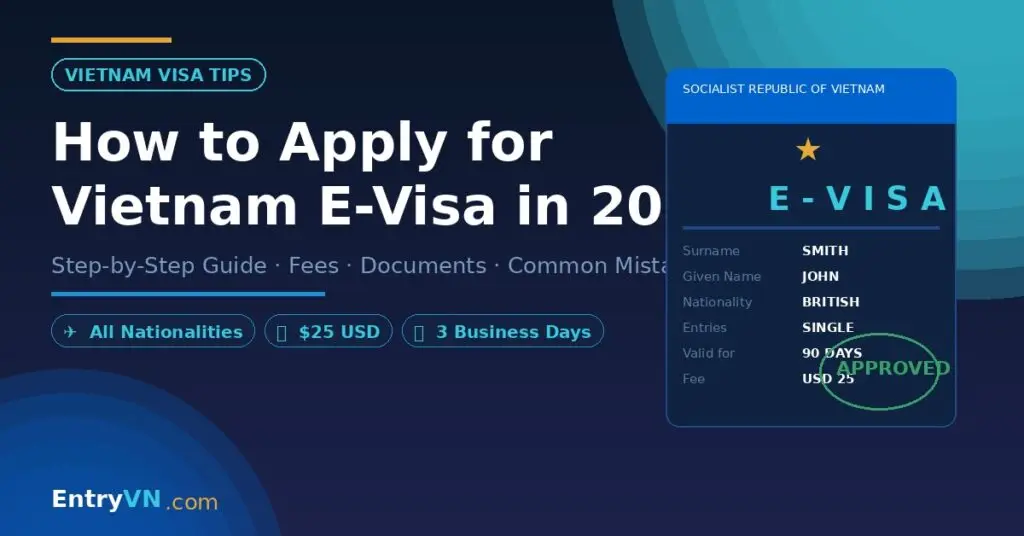
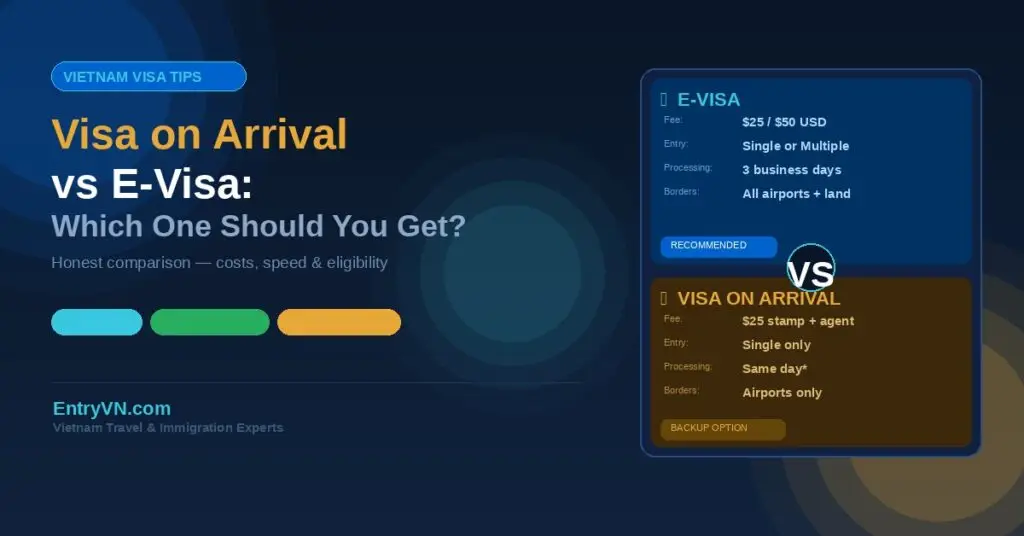
| E-visa | 90 days | $25 single / $50 multiple | No |
| Tourist / conference visa (DL, HN) | 90 days | Varies | Case by case |
| Family visit (VR) | 180 days | Varies | Case by case |
| Work, study, press (LĐ, DH, PV) | 1 year | Varies | Leads to a residence card |
| Temporary residence card | 2–10 years | Varies | Renewable |
The Date Trap Nobody Warns You About
An e-visa’s validity runs from the date on the visa, not from the day you actually land.
So a 90-day e-visa issued on 1 March and used on 1 April does not give you 90 days from April. It gives you what is left. Travellers lose weeks to this, and then find themselves recalculating at a border.
If You Came in Visa-Free
Twenty-three countries currently have unilateral 45-day visa exemption; ASEAN members have separate bilateral arrangements, typically 14–30 days depending on the country. The exemption is not extendable, and it is not something you can top up while you are here.
The clean upgrade is simply to apply for an e-visa before your next trip. It doubles your ceiling for $25 and removes the question entirely. Which countries get 45 days →
That makes the exemption more flexible than most people assume, and it is why some long-stay visitors alternate between border trips and e-visas rather than pursuing a longer visa category they do not qualify for.
Want the 90 days sorted before you fly?
E-visa handled end to end, with the pre-arrival declaration filed free. Confirmation within 24 hours.
Beyond 90 Days: You Need a Reason
Everything above three months attaches to a purpose rather than to a length. Vietnam does not issue a long tourist visa; it issues a work visa, a study visa, an investment visa, a family visa. The duration follows from the category.
- Family (VR) — up to 180 days, where you have a qualifying relative.
- Work (LĐ) — up to a year, and it requires a sponsoring employer, not just a job you do remotely.
- Study (DH) — up to a year, via an enrolling institution.
- Investment (ĐT) — duration scales with the size of the investment, up to ten years at the top tier.
Note what is absent: there is no digital nomad category. Remote workers use the routes above or the 90-day e-visa. What remote workers actually use →
What Changed Since Your Last Trip
If your last visit was more than a year ago, several things have moved: a pre-arrival declaration requirement, new power bank limits from March 2026, a rewritten VAT refund process from July 2026, and an outright ban on vapes.
Arriving with the previous trip’s assumptions is a common way to have an unexpectedly long conversation at the border. The current checklist →
Common Questions
No. An e-visa cannot be extended. When it expires you must leave Vietnam or convert to a different visa category. This is the most common planning mistake among people who assumed 90 days was a starting point rather than a ceiling.
Forty-five days if your nationality has unilateral visa exemption, or 90 days on an e-visa, which costs $25 for single entry and $50 for multiple entry. Longer stays require a visa tied to a purpose — work, study, investment or family — rather than a longer tourist visa, which does not exist.
No. Validity runs from the date on the visa, not from your actual entry. Applying well in advance shortens the time you can spend in the country, so it is better to apply close to the trip — standard processing is three to five working days.
Yes. Exiting Vietnam and re-entering starts a fresh 45-day exemption, with no minimum gap between visits and no annual limit. The old requirement for a waiting period between visa-free entries no longer applies. What a reset does not do is create residence — repeated back-to-back entries with no other purpose can still attract questions at the counter.
No dedicated category exists. Remote workers generally use the 90-day e-visa, or a visa category tied to an actual purpose in Vietnam such as employment or study, which requires a sponsoring organisation.
Visa durations and categories follow Law 23/2023 and the current visa exemption resolutions. Costs shown are Vietnamese government fees for the e-visa. Border practice on resetting a visa-free stay reflects how entries are handled in 2026; admission always remains at the discretion of the immigration officer.