Countries With Visa-Free Access to Vietnam in 2026 — Full List & Details
Part 1: Unilateral Visa Exemptions (Vietnam’s Decision)
Vietnam currently grants unilateral (one-sided) visa-free entry to 23 countries under two government resolutions. These exemptions are not permanent — they are renewed periodically by the Vietnamese government. Nationals of these countries do not need a visa but must comply with the stay limits.
Group A: 12 Countries — 45 Days Visa-Free
*(Government Resolution renewed from March 15, 2025, valid to March 14, 2028)*
Group B: 11 More Countries — 45 Days Visa-Free (Tourism Only)
Government Resolution 229/NQ-CP, issued 8 August 2025, effective 15 August 2025 – 14 August 2028.
A second resolution extended 45-day visa-free access to eleven more countries, all in Europe. Two things separate this group from Group A: entry must be for tourism purposes, and the resolution has a shorter runway — it expires in August 2028.
| Country | Stay | Country | Stay |
|---|---|---|---|
| 🇧🇪 Belgium | 45 days | 🇳🇱 Netherlands | 45 days |
| 🇭🇷 Croatia | 45 days | 🇵🇱 Poland | 45 days |
| 🇨🇿 Czech Republic | 45 days | 🇷🇴 Romania | 45 days |
| 🇭🇺 Hungary | 45 days | 🇸🇰 Slovakia | 45 days |
| 🇱🇺 Luxembourg | 45 days | 🇸🇮 Slovenia | 45 days |
| 🇨🇭 Switzerland | 45 days |
That brings Vietnam’s unilateral visa exemption total to 23 countries: the 12 long-standing ones in Group A, plus these 11. Bulgaria is not counted, for the reason above.
Not sure if your country is visa-free?
Message us on WhatsApp — our team checks your nationality and confirms your visa requirements in minutes, free.
Part 2: Bilateral Visa-Free Agreements (Normal Passports)
Vietnam has bilateral agreements with over 90 countries, but most of these only apply to diplomatic and official passports — NOT ordinary/tourist passports. The table below lists countries where standard tourist passport (Hộ chiếu phổ thông) holders also benefit.
| Country | Max Stay (Regular Passport) | Notes |
|---|---|---|
| 🇹🇭 Thailand | 30 days | Standard bilateral agreement |
| 🇲🇾 Malaysia | 30 days | Standard bilateral agreement |
| 🇸🇬 Singapore | 30 days | Standard bilateral agreement |
| 🇮🇩 Indonesia | 30 days | No extension allowed |
| 🇵🇭 Philippines | 21 days | Standard bilateral agreement |
| 🇰🇭 Cambodia | 30 days | Standard bilateral agreement |
| 🇱🇦 Laos | 30 days | Can extend up to 2 × 30 days |
| 🇲🇲 Myanmar | 14 days | Standard bilateral agreement |
| 🇧🇳 Brunei | 14 days | Standard bilateral agreement |
| 🇧🇾 Belarus | 30 days/visit, max 90 days/year | Bilateral agreement effective Jan 30, 2025 |
| 🇰🇿 Kazakhstan | 30 days, max 90/180 days | Effective May 25, 2024 |
| 🇨🇱 Chile | 90 days | For non-employment purposes |
| 🇰🇬 Kyrgyzstan | 30 days | Standard bilateral agreement |
Special Case: Phu Quoc Island
Phu Quoc operates under a special economic zone arrangement. Nationals of all countries may enter Phu Quoc island visa-free for up to 30 days, provided they enter directly into Phu Quoc (via PQC airport or designated sea entry points) and remain on the island.
If you enter Phu Quoc visa-free and then wish to travel to the Vietnamese mainland, you will need a regular visa. This makes it suitable for island-only stays but not for broader Vietnam travel.
Which Countries Do NOT Get Visa-Free Access?
Most of the world’s nationalities are NOT on any visa-free list. This includes:
- United States, Canada, Australia, New Zealand
- India, Pakistan, Bangladesh, Sri Lanka
- Most African nations
- Most Middle Eastern nations
- Most Latin American nations (except Chile)
- China (regular passport) — E-passport holders have a special arrangement, check current status
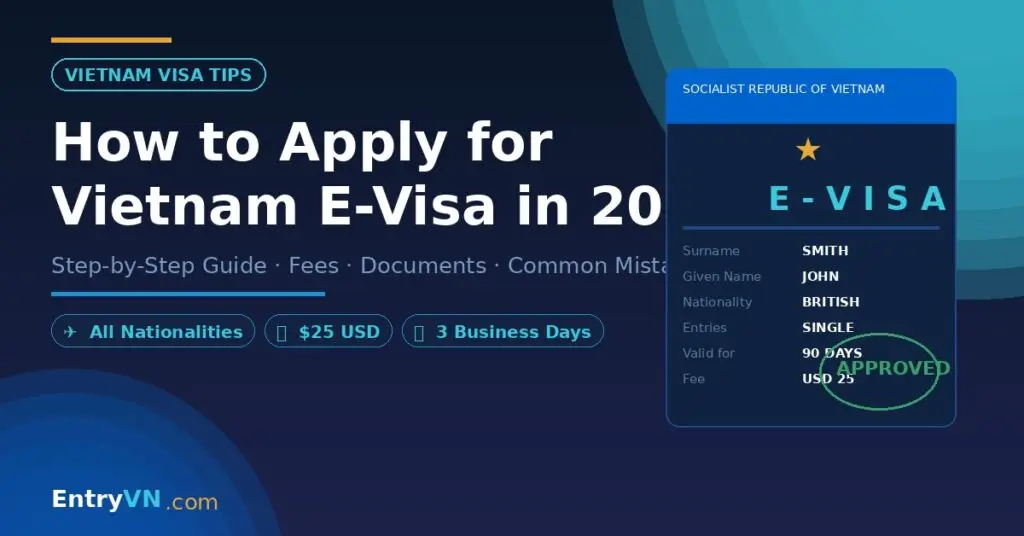
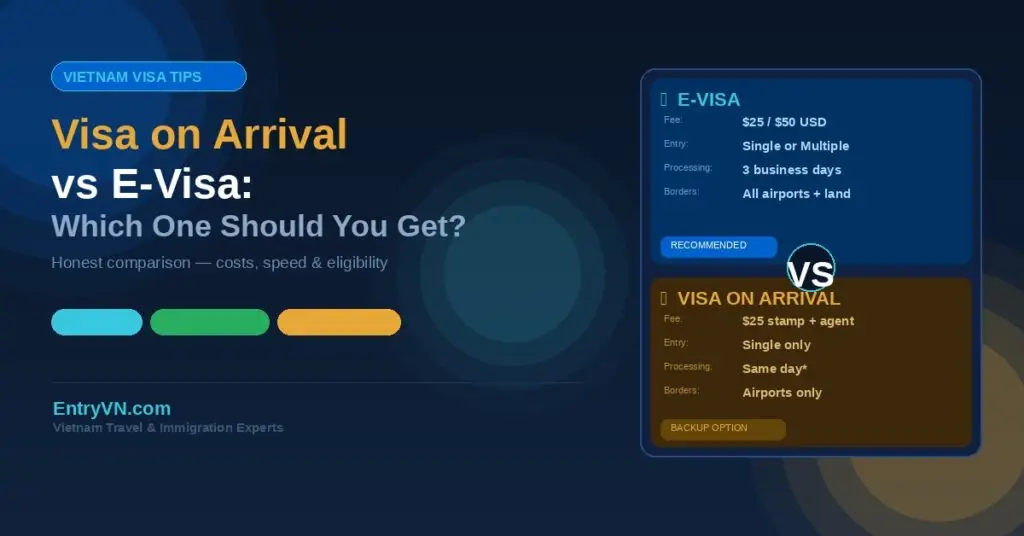
Citizens of these countries need a Vietnam e-visa ($25 single / $50 multiple, up to 90 days, at evisa.gov.vn) or a visa from a Vietnamese embassy.
Rules That Apply to All Visa-Free Visitors
- Passport must have at least 6 months validity remaining on your date of entry
- Must not be on any list prohibiting entry into Vietnam
- Stay limit counts from date of entry — not date you booked or applied
- You CANNOT extend a visa-free stay — to stay longer, you must exit Vietnam and re-enter
- Overstaying even one day is a violation — fines start at 500,000–2,000,000 VND for stays under 16 days
- Visa-free does NOT mean no immigration check — you still go through passport control
Frequently Asked Questions
No. US citizens are not on any Vietnam visa-free list. You need a Vietnam e-visa ($25 single / $50 multiple, valid up to 90 days). Apply at evisa.gov.vn at least 3–5 business days before travel.
No — visa-free stays cannot be extended in Vietnam (Laos is an exception, where you can extend up to 2 × 30 days). If you need more time, you must exit Vietnam and re-enter, or convert to an e-visa before your visa-free period expires. Visit immigration.gov.vn or an immigration office to understand your options.
Vietnam has signed bilateral agreements with 90+ countries, but most of these only apply to diplomatic (HCNG) and official/service passports — not regular tourist passports. If your country isn’t in the “bilateral agreement — regular passport” table above, your tourist passport is not covered and you need an e-visa or regular visa.
The official source is immigration.gov.vn (Vietnam Immigration Department). You can also check evisa.gov.vn which shows whether your nationality is eligible for e-visa (essentially all nationalities) and any special exemptions. Or message our team on WhatsApp — we check this daily and can confirm your situation in minutes, free of charge.