Vietnam Visa for UK Citizens 2026: 45-Day Visa-Free Entry Guide
45-Day Visa-Free Entry: How It Works
| Detail | Information |
|---|---|
| Visa required for ≤45 days? | No — British passport holders enter visa-free |
| Legal basis | Unilateral exemption, renewed by Vietnamese government (NQ renewed 15/3/2025, valid to 14/3/2028) |
| Maximum stay (visa-free) | 45 days per entry |
| Number of entries (visa-free) | Each entry grants 45 days. Multiple visits allowed if you exit fully. |
| Can you extend the 45-day stay? | No — you must exit Vietnam before day 45 and re-enter for a fresh 45 days, OR apply for an e-visa before arrival for a 90-day stay |
| Passport validity required | Visa-free entry: at least 6 months. E-visa: at least 30 days beyond the visa’s end date |
| Entry ports | All international airports, major land borders, seaports |
When Do UK Citizens Need an E-Visa?
Even with the 45-day visa exemption, there are situations where a British passport holder should apply for an e-visa instead:
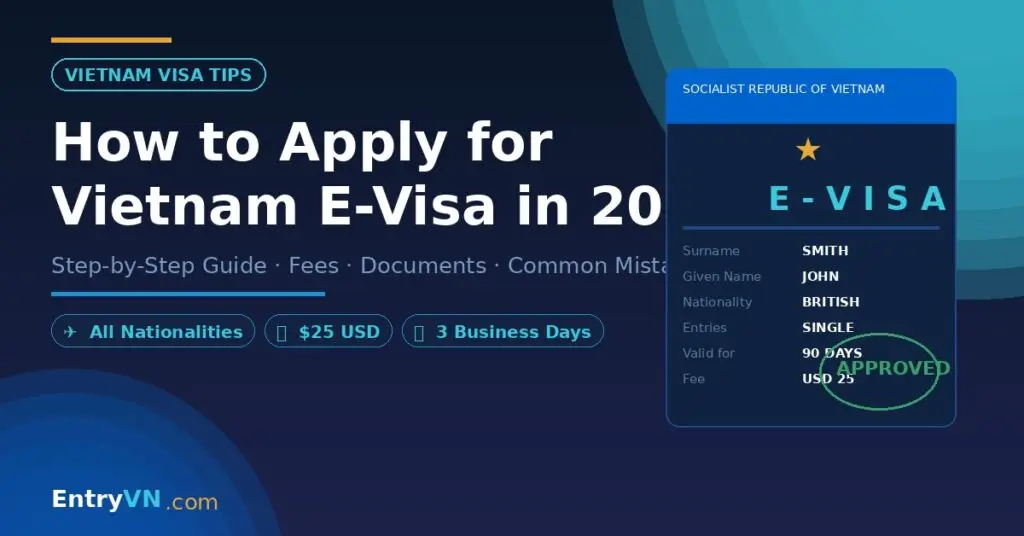
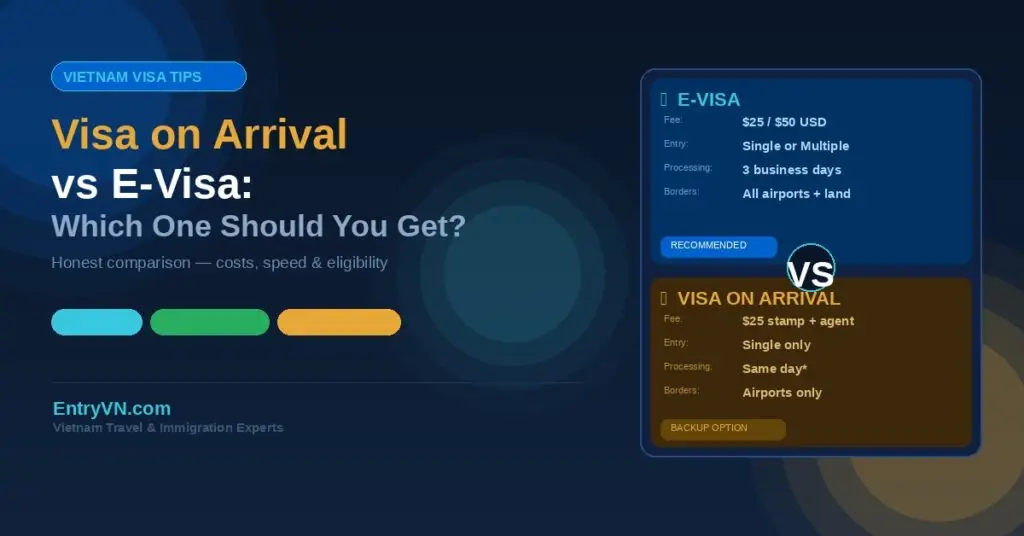
- Staying longer than 45 days: The e-visa allows up to 90 days — the visa-free entry is capped at 45. If you’re planning a longer stay (working remotely, slow travel, combined with mainland China or other neighbors), get an e-visa ($25 single, $50 multiple).
- Needing a multiple-entry visa: The visa-free entry is technically single-entry in practice — each entry resets to 45 days, but you must physically leave and re-enter. If you want a formal multiple-entry document (e.g., for business travel requiring multiple entries documented), the e-visa multiple-entry ($50) is the cleaner solution.
- Business purposes requiring visa documentation: Some UK employers or clients require a formal visa stamp for expense or compliance purposes. In this case, an e-visa is cleaner than the informal visa-free stamp.
Pre-Arrival Declaration (Required for All Visitors)
As of 2026, all international visitors — including UK citizens entering visa-free — must complete the Vietnam Pre-Arrival Declaration before landing:
- Portal: prearrival.immigration.gov.vn
- Cost: Free
- When to do it: Up to 3 days before arrival (or at the airport if you forgot — but it takes longer)
- What you get: A QR code to show at immigration on arrival
- Does it replace your visa? No — it’s a separate pre-registration. For visa-free travelers, you still present your passport as usual.
Applying for an E-Visa (If You Need One)
If your trip exceeds 45 days or you need formal documentation, apply at evisa.gov.vn:
| E-Visa Details | Information |
|---|---|
| Single entry cost | $25 USD |
| Multiple entry cost | $50 USD |
| Maximum validity | 90 days |
| Processing time | 3–5 business days (standard) |
| Documents needed | Passport bio page scan + portrait photo |
| Extendable? | No — exit and reapply |
Flying into Noi Bai or Tan Son Nhat?
Fast Track skips the immigration queue — ideal for busy arrival periods and peak season.
Frequently Asked Questions
No — for stays up to 45 days. British citizens are exempt from Vietnam’s visa requirement under a unilateral exemption valid until 14 March 2028. Simply arrive with your valid UK passport. For stays over 45 days, apply for an e-visa at evisa.gov.vn ($25–50).
Not on visa-free status. The 45-day limit is fixed. However, you can exit Vietnam (e.g., a day trip to Cambodia or Laos) and re-enter for another 45-day visa-free period — this is known informally as a “visa run.” Alternatively, apply for a 90-day e-visa ($25 single) before your trip. Note: Vietnam immigration may question repeat “visa run” entries if the pattern appears to circumvent stay limits.
The 45-day visa-free exemption is based on passport nationality. British National (Overseas) BNO passports issued to Hong Kong residents are British passports but may be treated differently at some borders. In practice, BNO holders have generally been processed under the UK exemption, but this is not guaranteed by the written policy. If you hold a BNO passport, consider applying for an e-visa for certainty.
Likely yes — Vietnam has consistently renewed these exemptions since first introducing them and has been expanding the list of eligible countries (adding 12 more in August 2025). The UK is one of the original 12 “core” countries. However, the exemption is a government policy decision, not a permanent law — always check current policy before booking.