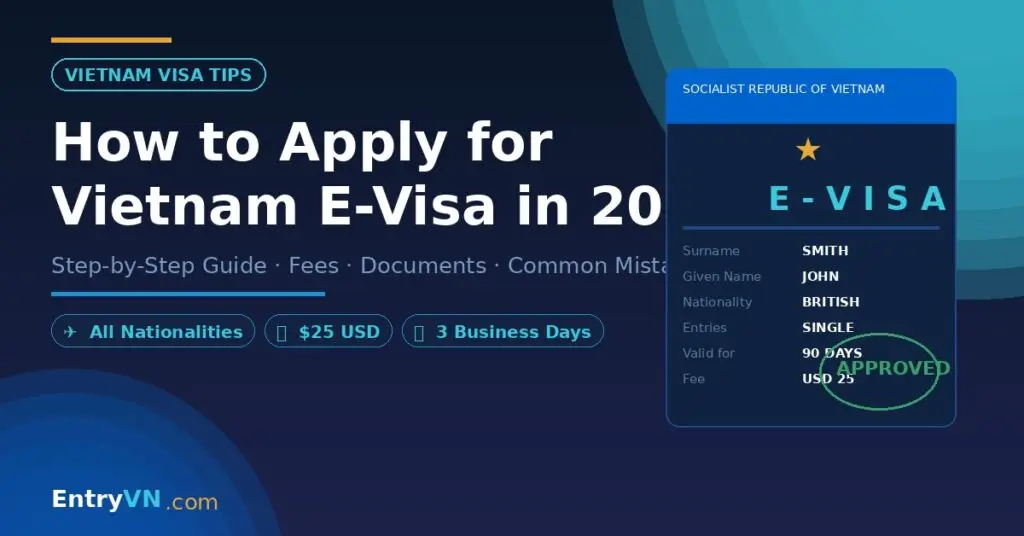
Vietnam E-Visa for US Citizens 2026: Complete Guide
US Citizen Vietnam Visa: The Basics
| Detail | Information |
|---|---|
| Visa required? | Yes — US passport holders are NOT exempt from Vietnam visa requirements |
| Best option | Vietnam E-Visa (evisa.gov.vn) |
| Cost | $25 USD (single entry) | $50 USD (multiple entry) |
| Maximum stay | 90 days per e-visa |
| Can be extended? | No — e-visas cannot be extended. Must exit and reapply. |
| Processing time | 3–5 business days (standard) | 1–3 days (rush) | 2–8 hours (emergency) |
| Entry points | All international airports, major land borders, seaports |
| Valid from | Date of issue, not date of entry |
| Passport requirement | Must stay valid at least 30 days beyond the end date of the visa |
How to Apply: Step-by-Step
Go to evisa.gov.vn (official site only)
Click “Apply for E-Visa.” The official URL is evisa.gov.vn — there are many scam sites that charge higher fees. The official site charges $25 (single) or $50 (multiple). Payment by Visa, Mastercard, or international debit card.
Fill in your information
Personal details exactly as they appear in your passport. Full name, date of birth, passport number, issue/expiry dates, nationality. You’ll also need your intended entry date, exit date, purpose of visit (tourism/business), planned accommodation in Vietnam, and port of entry.
Upload required documents
You need two images: (1) a photo of your passport biographical page (clear, all 4 corners visible), and (2) a portrait photo (similar to a passport photo — face clearly visible, white or light background, no sunglasses).
Choose single or multiple entry and pay
If you’re staying in Vietnam only: single entry ($25) is fine. If you plan to cross into Cambodia, Laos, or Thailand and return to Vietnam: get multiple entry ($50). Payment by international credit or debit card — some US-issued cards may require pre-authorization for international transactions.
Wait for approval email
Standard: 3–5 business days. You receive the e-visa as a PDF attachment. Print it or save it to your phone. You must present it at immigration — it is not retrievable from a QR code scan alone.
Complete the Pre-Arrival Declaration
As of 2026, all international visitors must complete the Vietnam Pre-Arrival Declaration at prearrival.immigration.gov.vn before landing. It’s free, takes 5 minutes, and gives you a QR code to show at immigration. Do this within 3 days of departure.
Single vs Multiple Entry: Which to Choose?
| Factor | Single Entry ($25) | Multiple Entry ($50) |
|---|---|---|
| Number of entries | 1 | Unlimited within validity |
| Best for | Vietnam-only trip | Vietnam + neighboring country side trips |
| Typical scenario | Direct Hanoi → HCMC trip | Vietnam + Cambodia overland; or Phu Quoc + mainland |
| Re-entry? | No — once you exit, visa is finished | Yes — can re-enter multiple times within 90-day window |
Practical Tips for US Citizens
- Apply early: Standard processing is 3–5 business days. Apply at least 7–10 days before your flight in case of any corrections needed.
- US passport validity: Your passport must stay valid at least 30 days beyond the end date of your e-visa. If it expires sooner, renew it before you apply — the e-visa is tied to your passport number.
- Keep digital and paper copies: Save your e-visa PDF on your phone and email, and print a copy. Immigration officers stamp your passport on arrival — not the e-visa itself. A printed copy is only needed if an officer specifically requests it, but having one on hand avoids any hassle.
- ESTA/Green Card holders: Your visa status in the US does not affect Vietnam entry. US Green Card holders with non-US passports apply based on their passport nationality, not US residency.
- Credit card declined? Vietnamese government systems sometimes reject certain US bank cards. Try a different card or use a Wise virtual debit card.
Arriving at Noi Bai (HAN) or Tan Son Nhat (SGN)?
Pre-book Fast Track to skip an immigration queue that reaches three hours at Noi Bai in peak season — common during peak season.
Frequently Asked Questions
Yes. As of July 2026, US citizens are not exempt from Vietnamese visa requirements. The easiest option is the Vietnam e-visa ($25–50), available to all nationalities at evisa.gov.vn. There is no special bilateral visa exemption between the US and Vietnam for ordinary passport holders.
With a standard e-visa: up to 90 days per visa. The 90-day count starts from your actual entry date. You cannot extend an e-visa — when your authorized stay expires, you must exit and apply for a new visa. For longer stays, look into business visas (LV category) or temporary residence cards, which require employer or institutional sponsorship.
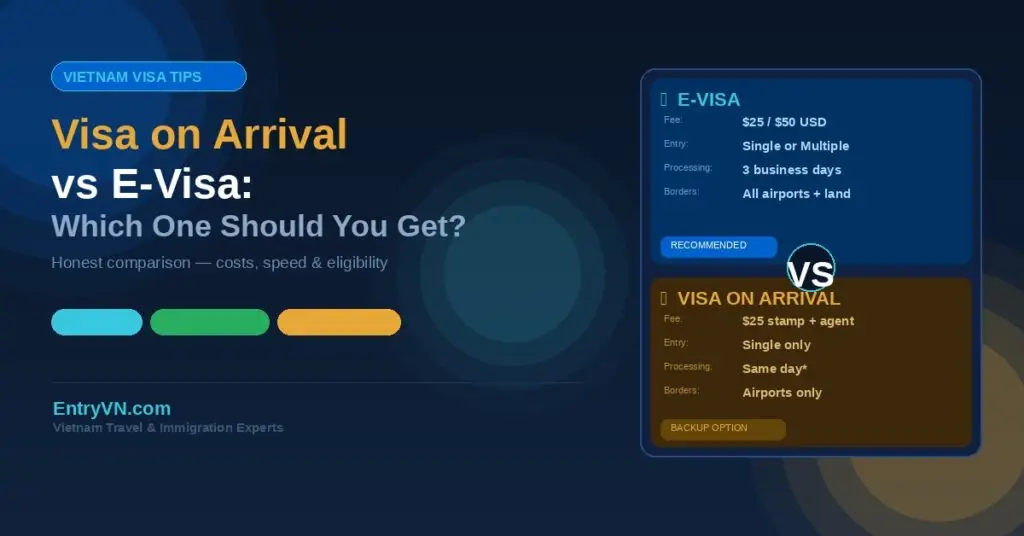
Technically yes, but Visa on Arrival (VOA) for US citizens requires a pre-obtained approval letter from a licensed Vietnamese travel agency (not a government service). The total cost (agency fee + stamping fee on arrival) is typically $30–60 and more complicated than the e-visa. The e-visa ($25–50, fully online, government-direct) is almost always the better option.
Rejection is uncommon for legitimate US travelers. If rejected, you’ll receive an email stating the reason. Common reasons: passport photo too small/blurry, name mismatch vs passport, invalid passport details. You can reapply — there’s no mandatory waiting period. Contact our team on WhatsApp if you need help resolving a rejection.
Yes — as of 2026, all international visitors (including Americans) arriving at Vietnamese airports must complete the Pre-Arrival Declaration at prearrival.immigration.gov.vn. It’s free and separate from your visa. You’ll get a QR code to show at immigration. This does not replace your e-visa — you need both.